
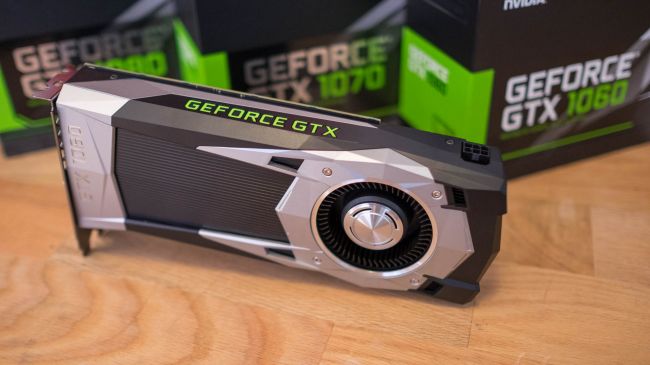
Oh what a joyous time to be a PC enthusiast. This year is set to be the largest single advancement in manufacturing processes and performance increases since the start of Intel’s 32nm Nehalem processor line way back in 2009.
Let’s just take a step back and analyze this for a second. In the last 12 months we’ve seen the Z170 chipset, Skylake, Broadwell-E, Pascal’s GTX 1080 and 1070, AMD’s Polaris RX 480 and now, finally Nvidia’s answer to the red team’s mid-range booty kicker, the GTX 1060.
Let’s face the facts. No matter how you look at it, both Nvidia’s and AMD’s arsenals stem from the mid-range. The flagships gain the prestige, but it’s the mid-range that wins the war.
AMD’s RX 480 is currently dominating that part of the market. Its latest card is priced aggressively and sits comfortably in performance terms between the GTX 970 and GTX 980. But is it priced aggressively enough to stem off the tidal wave that is the GTX 1060?
Prices for Nvidia’s latest card start at $249 (around AUS$332) over in the US, while you can pick one up in the UK for north of £240. Click here for more on where to buy the Nvidia GTX 1060, and how much it costs.
Pascal power
So then, what do we know about this new mid-range Titan? Well, it’s still based off of Pascal’s 16nm FinFET manufacturing process, albeit on the GP106 processor as opposed to the GTX 1080 and 1070’s GP104.
It comes in either 6GB or 3GB variants, at the standard 8GB/s of bandwidth on a 192-bit bus, features an impressive 1,280 CUDA cores, 80 Texture Units and 48 ROPs. Couple that with an increase of 1.46 billion transistors, a 120 watt TDP and a base spec base clock (before GPU boost gets its hands on it) of 1708 MHz and we’re on to a winner.